Purpose / Goal
The goal of this project was to analyze Argentina's energy system and compare it with Pakistan's energy challenges. The research focused on how geography, natural resources, infrastructure, electricity access, and energy policy affect long-term power-system reliability.
The project connects directly to power and utility engineering because it studies generation mix, transmission and distribution limitations, grid bottlenecks, energy security, and future renewable integration.
Research Scope
- Argentina's geography, economy, natural resources, and electricity access.
- Argentina's dependence on natural gas and oil for energy production and consumption.
- Renewable energy growth, including wind potential in Patagonia and solar potential in northern regions.
- Transmission and distribution infrastructure problems, including bottlenecks and outdated equipment.
- Comparison with Pakistan's energy access, electricity shortages, fuel dependence, and development challenges.
- Recommendations for improving energy security, lowering emissions, and supporting long-term grid growth.
Key Findings
Argentina
Argentina has universal electricity access and strong long-term energy potential because of its natural gas, oil, lithium, wind, and solar resources. However, the country still relies heavily on fossil fuels, especially natural gas and oil, which creates long-term risks tied to emissions, investment, and fuel infrastructure.
Pakistan Comparison
Pakistan faces a more severe energy-access challenge, including electricity shortages, stronger dependence on imported fuels, and a large population without reliable electricity or clean cooking access. Compared with Pakistan, Argentina is in a stronger position because it has broader domestic energy resources and stronger export potential.
Grid and Infrastructure Risk
A major conclusion was that Argentina's biggest limitation is not only resource availability, but the ability to move and deliver energy reliably. Transmission, distribution, and energy-transport bottlenecks restrict growth even when the country has strong natural resources.
Results / Evidence
The final result was a complete energy-systems research project with both a written report and presentation. The project evaluated Argentina's energy mix, electricity access, renewable growth, grid infrastructure limits, disruption vulnerabilities, and future recommendations, then compared those results against Pakistan's energy system.
The strongest engineering result was identifying that Argentina's long-term power-sector growth depends on more than generation resources. The country has strong wind, solar, natural gas, and oil potential, but transmission and distribution investment is necessary to reduce bottlenecks, improve reliability, support renewable integration, and strengthen energy security.
Evidence includes a full written report, a slide presentation, energy-mix charts, emissions charts, country comparison data, infrastructure-disruption analysis, and recommendations focused on renewable expansion and transmission/distribution upgrades.
Methods / Sources
The project used energy and development data from sources such as the U.S. Energy Information Administration, International Energy Agency, World Bank, and RenovAr-related materials. The research combined quantitative energy-mix data with written analysis of policy, infrastructure, and long-term system risk.
Project Images
These images show the presentation and report evidence, including Argentina background, energy characteristics, significant energy events, the Pakistan comparison, disruption risk, and future recommendations.
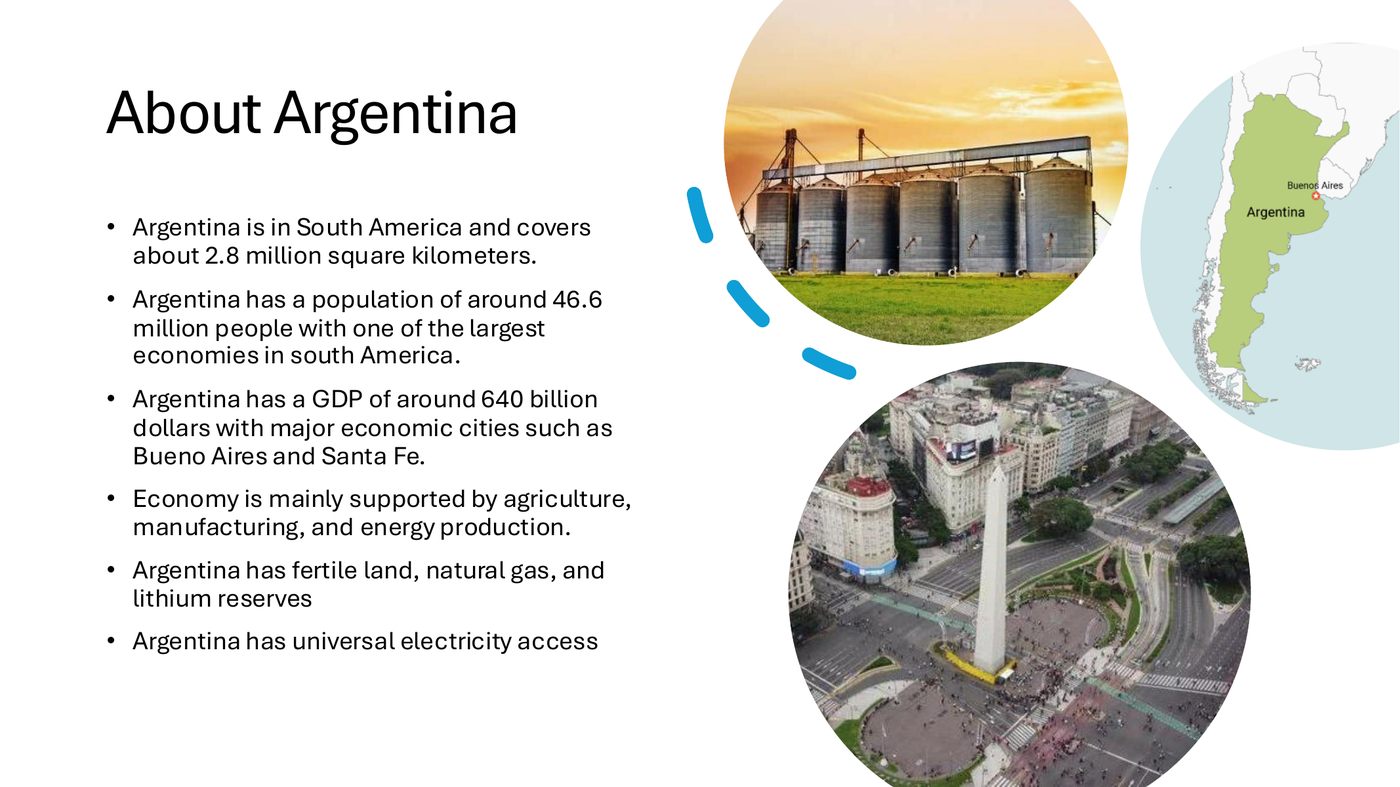
Argentina overview: geography, economy, resources, and universal electricity access.
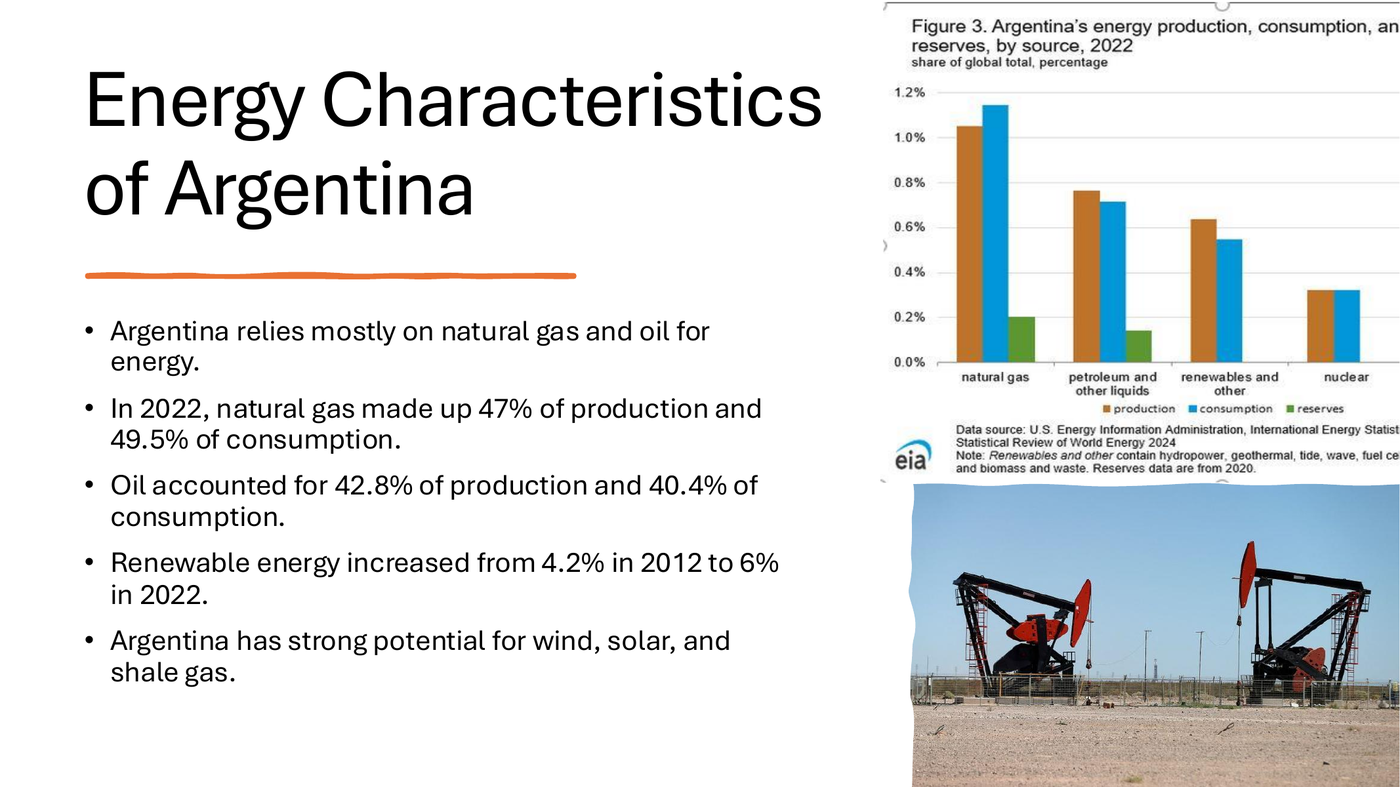
Energy characteristics showing Argentina's natural gas, oil, renewable, and nuclear energy shares.
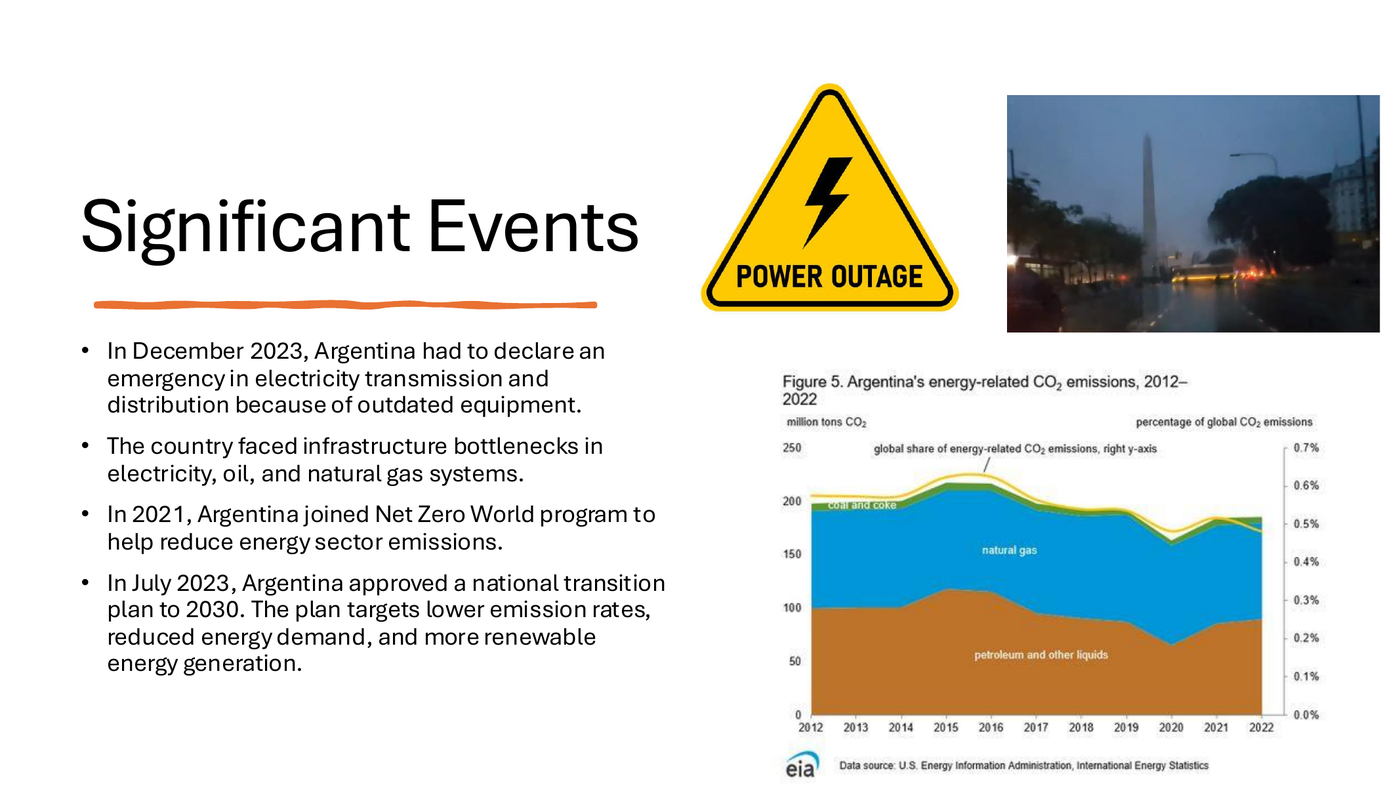
Significant energy events: transmission and distribution emergency, bottlenecks, and transition planning.
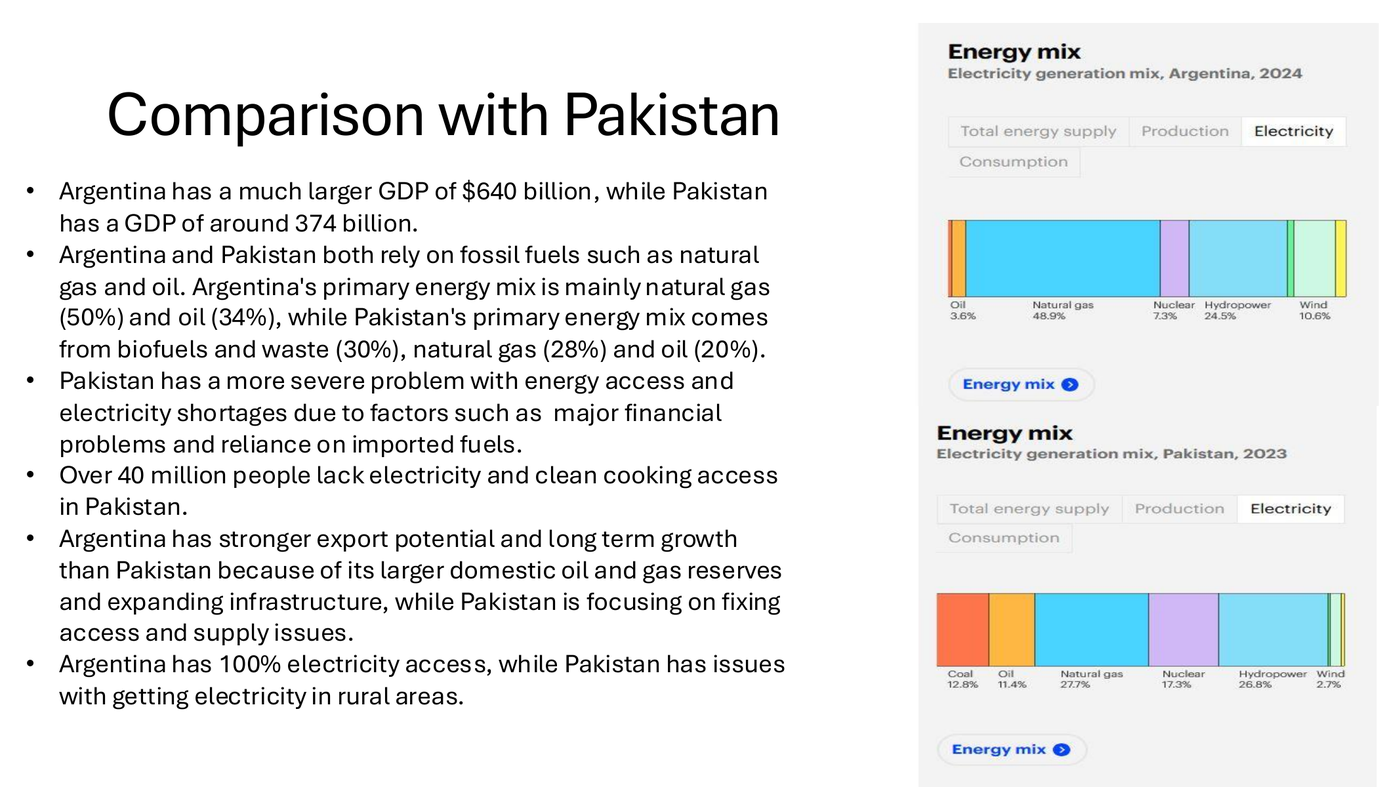
Comparison with Pakistan focused on GDP, energy mix, electricity access, and fuel dependence.
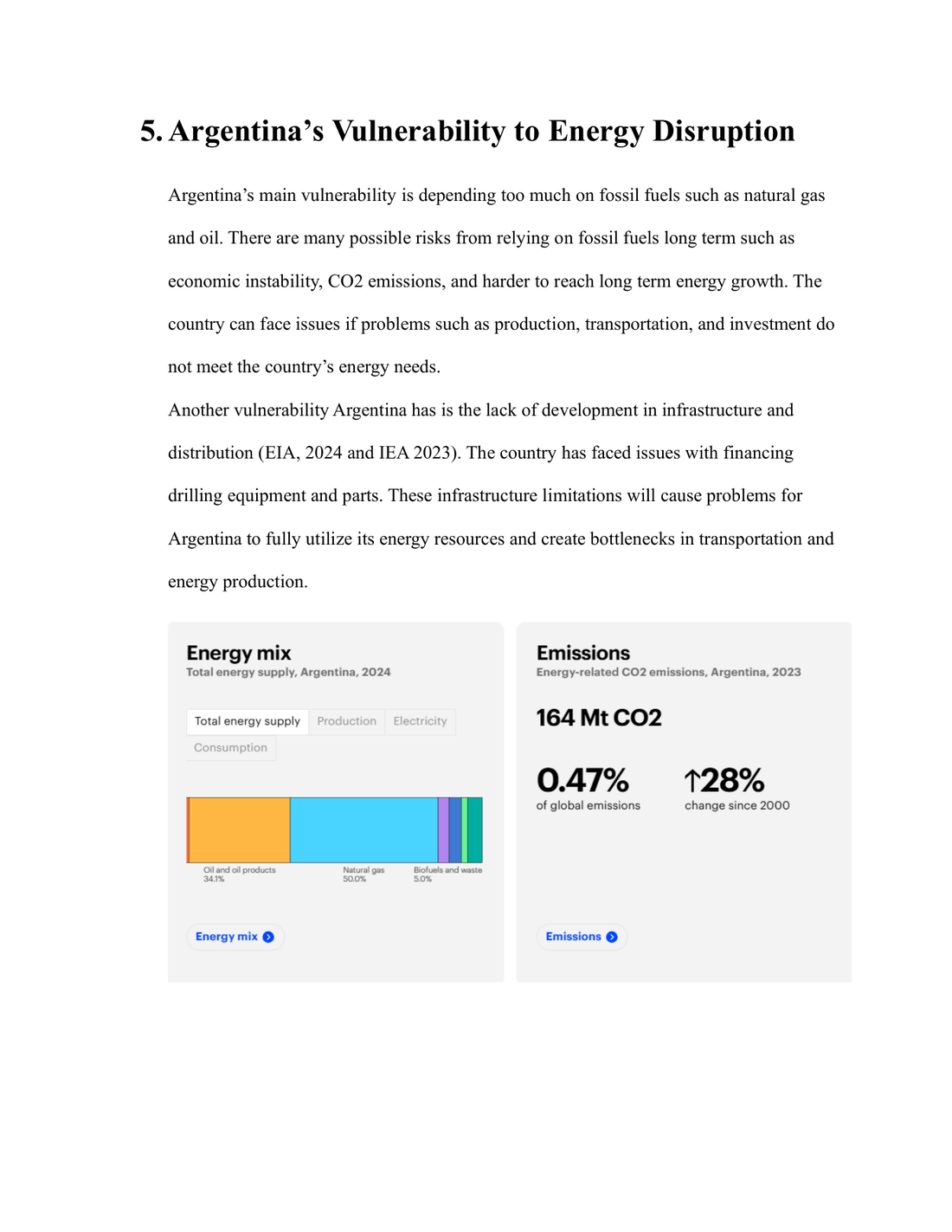
Written-report section analyzing fossil-fuel dependence and infrastructure vulnerability.
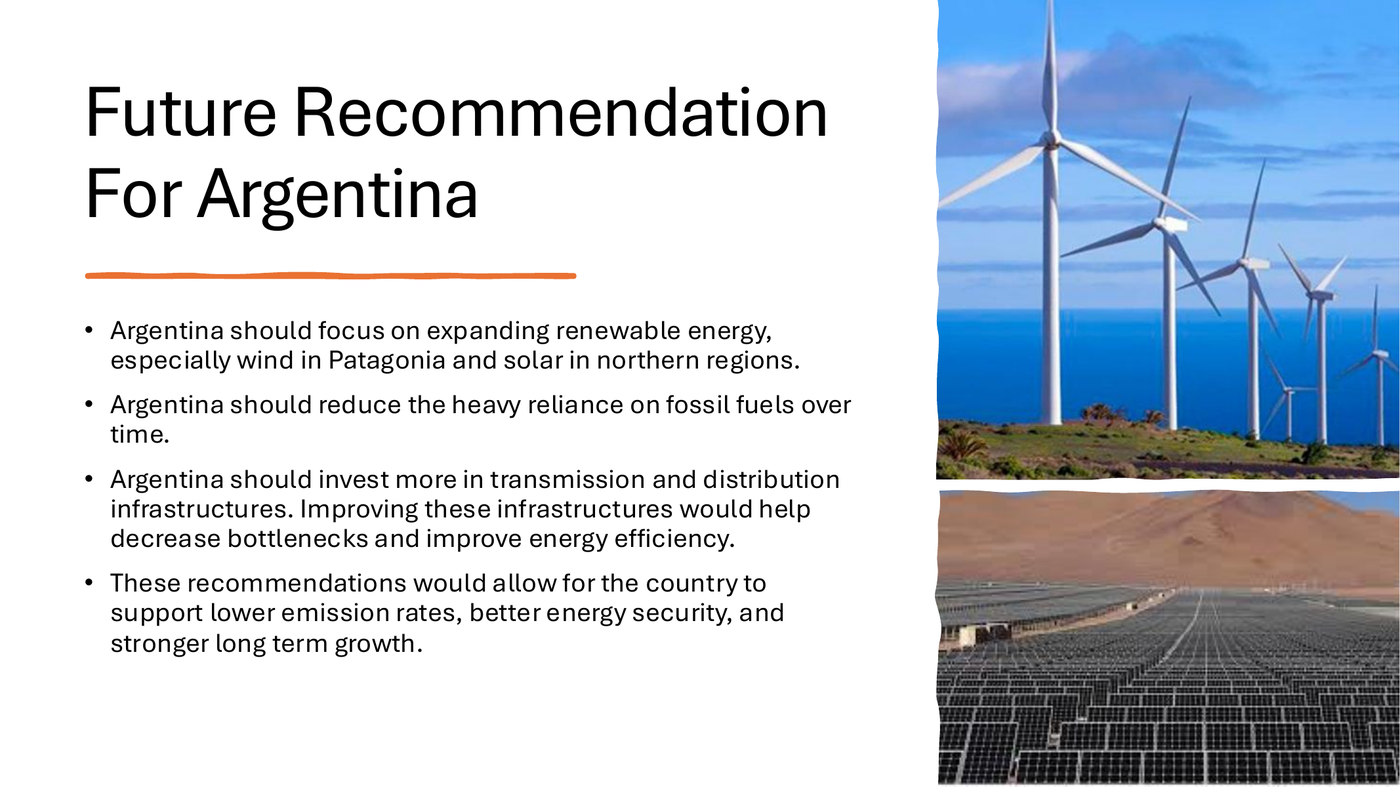
Future recommendations: renewable expansion, fossil-fuel reduction, and grid infrastructure investment.
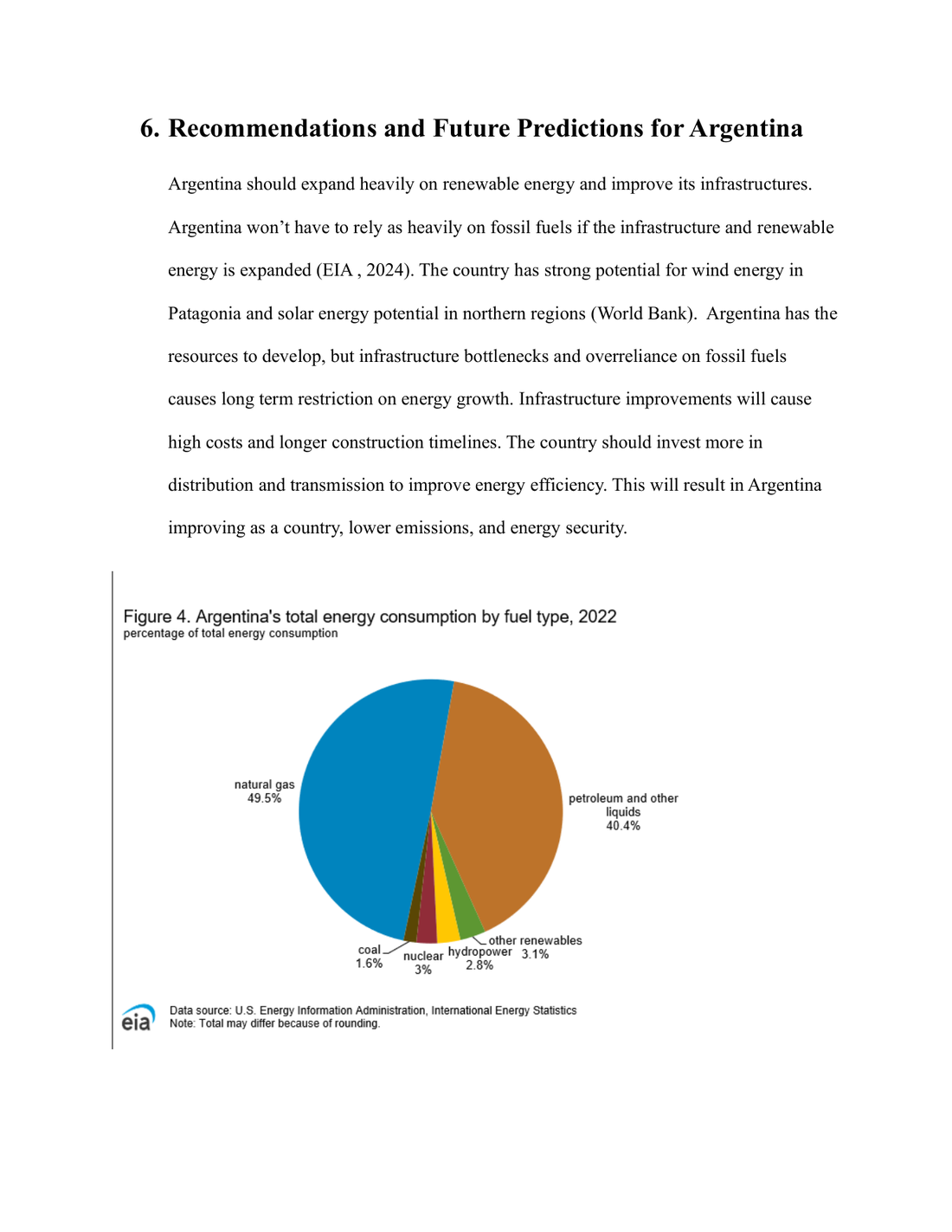
Report evidence showing Argentina's total energy consumption by fuel type and recommendation analysis.
Next Improvements
Future improvements could include adding updated energy data, building a cleaner data table, comparing energy cost and reliability metrics, adding more transmission/distribution maps, and expanding the project into a larger power-grid reliability case study.